
Driving Test Center Explained: What Learners Need
Over 85 percent of UK teens will visit a driving test center before getting their first license. The process matters because a single mistake during testing can delay independence by months. Understanding what really happens inside these official centers makes the entire experience less stressful and increases your chances of passing on the first try. Discover how these facilities operate, what you need to bring, and simple ways to prepare like a pro.
Key Takeaways
| Point | Details |
|---|---|
| Driving Test Centers Evaluate Skills | Official locations assess a learner's practical driving skills and theoretical knowledge through structured examinations. |
| Types of Tests Offered | Various tests, including Standard, Manual, Automatic, and Commercial License, cater to different driver needs and competency levels. |
| Testing Process Structure | The evaluation involves stages: registration, theoretical knowledge, vehicle inspection, and practical road test to ensure comprehensive assessment. |
| Common Pitfalls to Avoid | Candidates should watch for observation failures and traffic rule violations, as these can lead to disqualification during the test. |
What Is a Driving Test Center?
A driving test center serves as the official location where individuals demonstrate their ability to safely operate a motor vehicle and obtain their driving license. These specialized facilities are designed to comprehensively evaluate a learner's practical driving skills and theoretical knowledge through structured examinations approved by transportation authorities.
Driving test centers like those certified by global vehicle inspection organizations conduct rigorous assessments that go beyond simple driving maneuvers. These centers typically feature controlled environments with standardized testing routes, professional examiners, and carefully designed scenarios that test a driver's ability to navigate real-world traffic situations safely. Examiners evaluate critical skills such as vehicle control, traffic rule comprehension, hazard perception, and situational awareness.
The testing process at these centers involves multiple components. Learners must first complete a theoretical examination demonstrating their understanding of traffic regulations, road signs, and safety protocols. Following the written test, candidates proceed to a practical driving assessment where they demonstrate their ability to operate a vehicle competently. Test centers are strategically located to provide accessible, standardized testing environments that simulate diverse driving conditions and challenges.
Pro Driver's Tip: Research your local driving test center's specific requirements and layout before your scheduled examination. Familiarize yourself with the potential routes, standard testing procedures, and common evaluation criteria to boost your confidence and increase your chances of success.
Types of Driving Tests Offered
Driving test centers offer multiple types of examinations designed to comprehensively assess a learner's driving capabilities. These tests typically include theoretical knowledge assessments and practical driving evaluations that thoroughly examine a driver's skills, understanding of traffic regulations, and ability to operate a vehicle safely.
Comprehensive driving examinations generally encompass several distinct test categories. The primary categories include:
Here’s a comparison of different driving test types and their main focuses:
| Test Type | Primary Audience | Key Assessment Areas |
|---|---|---|
| Standard License | First-time drivers | General rules, safe operation |
| Manual Transmission | Learners of manual cars | Gear shifts, clutch control |
| Automatic Transmission | Learners of automatic cars | Smoothness, focus on traffic |
| Commercial License (CDL) | Professional/commercial use | Advanced skills, regulations |
- Standard License Test: A complete assessment for new drivers seeking their first driving license
- Manual Transmission Test: A specialized examination focusing on manual vehicle operation
- Automatic Transmission Test: Designed specifically for drivers learning on automatic vehicles
- Commercial Driver's License (CDL) Test: Advanced testing for professional drivers
The testing process varies across different regions, but international driver testing standards typically involve multiple components. Most jurisdictions require candidates to pass a written knowledge exam that covers traffic laws, road signs, and safe driving principles. Following the theoretical portion, learners must complete a practical driving test where examiners evaluate their real-world driving performance, including skills like parking, lane changing, turning, and responding to potential hazards.
Pro Driving Test Tip: Practice extensively in the specific type of vehicle you'll use during your test. Familiarity with the vehicle's controls and handling can significantly boost your confidence and performance during the actual examination.
How the Test Center Process Works
The driving test center process is a carefully structured evaluation designed to comprehensively assess a driver's skills, knowledge, and road readiness. Driving examination centers follow a systematic approach that typically involves multiple stages of assessment to ensure candidates meet rigorous safety and competency standards.
The standard process generally unfolds in the following sequence:
Registration and Documentation
- Verify personal identification
- Confirm vehicle documentation
- Provide proof of driving lessons or training
Theoretical Knowledge Test
- Written examination covering traffic laws
- Road sign identification
- Hazard perception scenarios
- Minimum passing score requirements
Vehicle Inspection
- Checking vehicle safety features
- Verifying operational status of lights, signals, brakes
- Ensuring vehicle meets testing requirements
The practical driving component, as outlined by international driver testing standards, involves a structured on-road assessment. Examiners evaluate critical driving skills including proper lane changing, accurate parking, smooth acceleration and braking, effective mirror usage, and appropriate response to potential road hazards. Each maneuver is meticulously scored against standardized performance criteria.
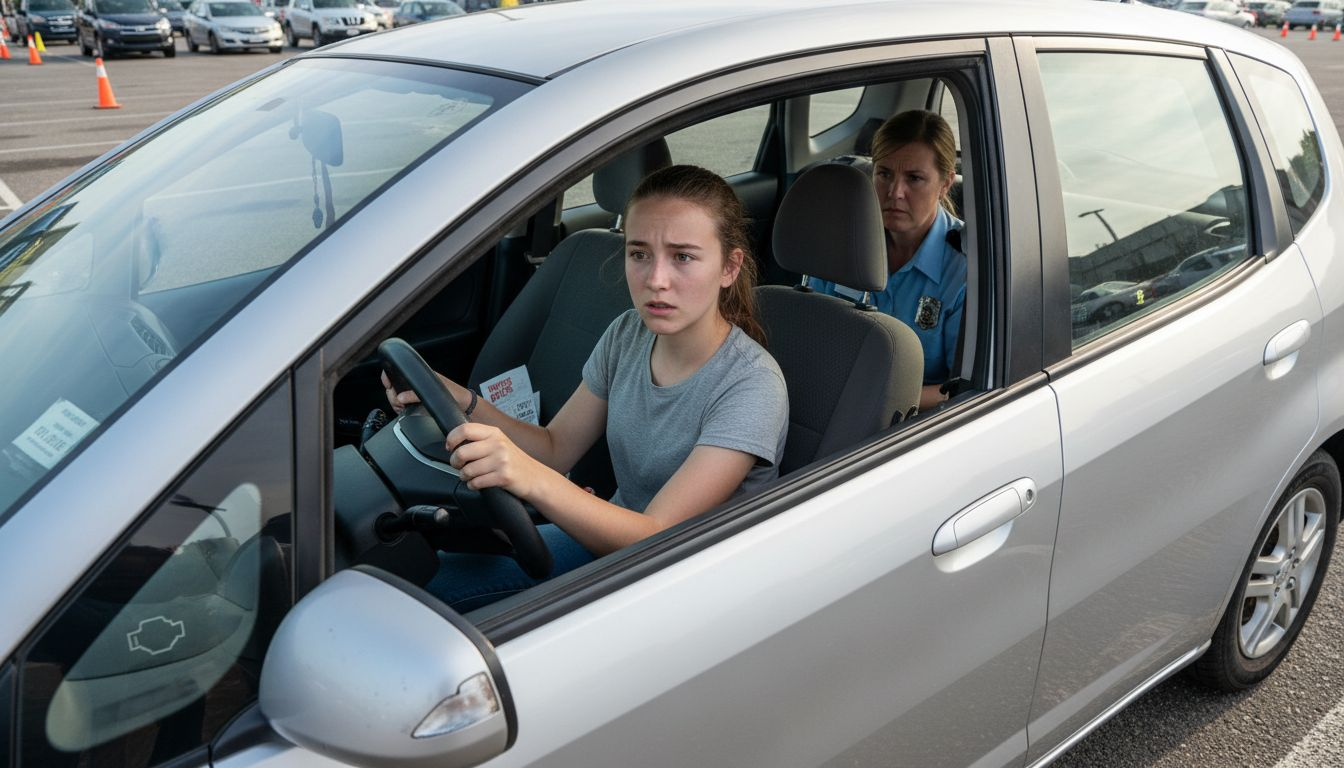
Pro Driver's Preparation Tip: Arrive at the test center at least 30 minutes early, bringing all required documentation, a fully inspected vehicle, and a calm, focused mindset. Preparation and composure can significantly improve your chances of successfully navigating the examination process.
Eligibility and Booking Requirements
Navigating the complex driver licensing eligibility criteria requires careful understanding of multiple requirements that vary depending on your specific circumstances. Prospective drivers must meet several key prerequisites before scheduling their driving test, including age restrictions, educational qualifications, and documentation standards.
Typical eligibility requirements typically encompass:
Minimum Age Requirement
- Standard license: Usually 16-18 years old
- Commercial license: Minimum 18-21 years old
- Specific age variations by vehicle type
Documentation Needed
- Valid government-issued photo identification
- Proof of residency
- Completed driver education certificate
- Medical fitness declaration
The international driver testing standards outline comprehensive booking procedures that generally involve several critical steps. Candidates must typically complete a preliminary driver education course, pass a written knowledge examination, and provide evidence of supervised driving experience before scheduling their practical driving test. Most test centers require advance booking, with many offering online registration platforms that streamline the appointment process.
Booking a driving test involves selecting an available time slot, paying the examination fee, and confirming all prerequisite requirements have been met. Some jurisdictions mandate a waiting period between knowledge test and practical examination, so careful planning and documentation are essential for a smooth testing experience.
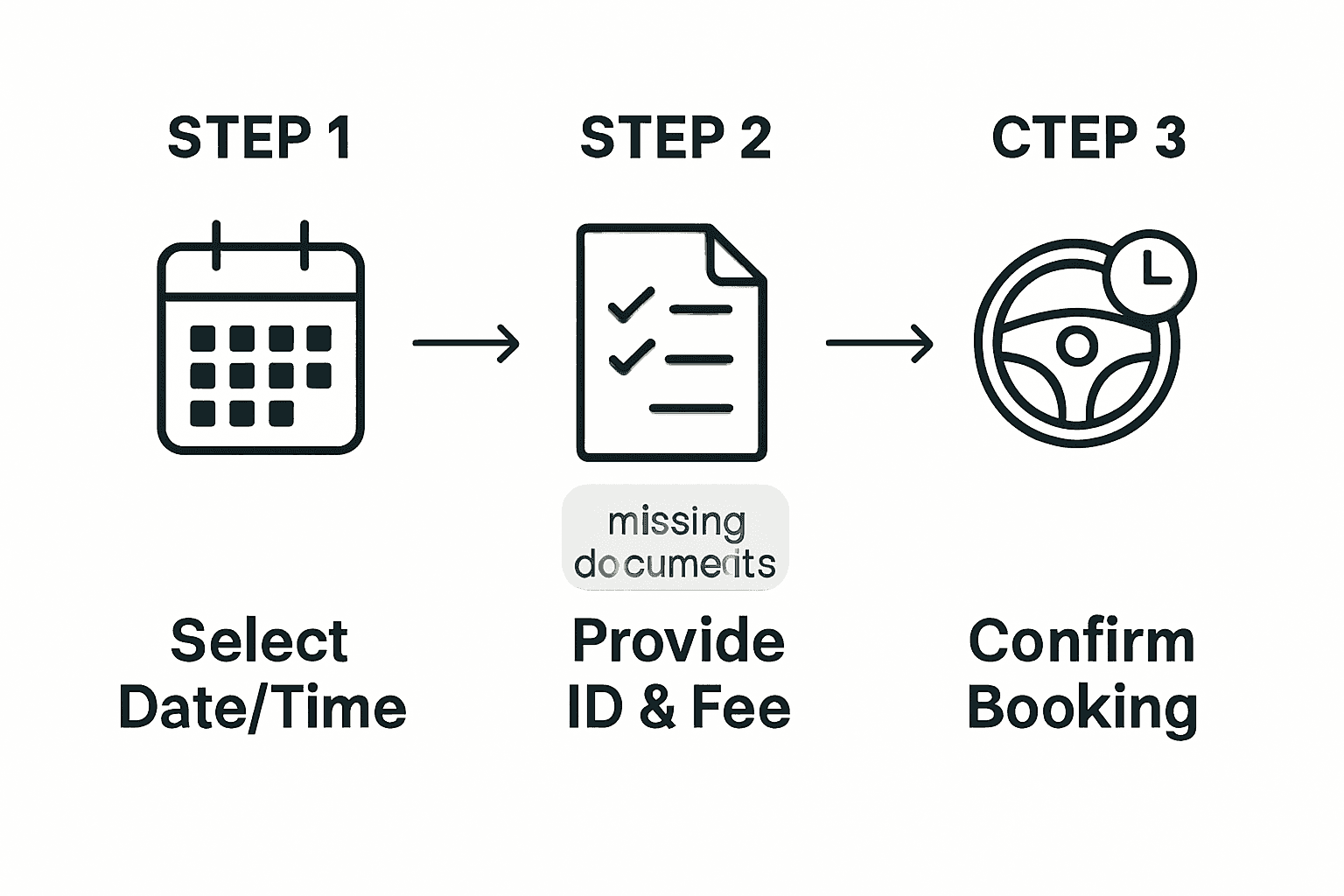
To clarify the licensing process, here’s a summary of steps and requirements involved:
| Stage | Purpose | Key Requirements |
|---|---|---|
| Registration | Identity and eligibility verification | ID, proof of training |
| Written Knowledge Test | Assess understanding of laws and signs | Minimum score, preparation |
| Vehicle Inspection | Ensure safety and compliance | Working lights, brakes |
| Practical Road Test | Evaluate on-road driving proficiency | Passing maneuvers, safety |
| Booking/Eligibility | Reserve test date with all prerequisites met | Documentation, fees paid |
Pro Scheduling Tip: Book your driving test during off-peak hours and weekdays if possible. These time slots often have shorter wait times and potentially less crowded testing environments, increasing your chances of a more relaxed examination experience.
Common Pitfalls to Avoid on Test Day
Successfully navigating a driving test requires understanding and avoiding common mistakes that can instantly disqualify candidates. Driving test performance standards emphasize the critical importance of demonstrating consistent, safe driving behaviors throughout the entire examination process.
Most frequent errors that can compromise your test result include:
- Insufficient mirror checking
- Inadequate blind spot verification
- Poor peripheral awareness
Traffic Rule Violations
- Improper signaling
- Failing to yield right of way
- Incorrect lane positioning
- Speed limit disregulation
The comprehensive driving examination guidelines highlight specific technical mistakes that examiners scrutinize. Candidates often struggle with smooth vehicle control, including inconsistent acceleration, abrupt braking, and imprecise steering techniques. Examiners carefully evaluate not just individual maneuvers, but your overall driving approach, looking for confident, methodical performance that demonstrates safety consciousness.
Psychological factors can significantly impact test performance. Nervousness frequently leads to overthinking, resulting in hesitation or overcorrection during critical driving moments. Maintaining composure, staying focused, and executing learned skills with calm deliberation are essential for successfully passing your driving examination.
Pro Confidence Tip: Practice deep breathing techniques before and during your test to manage anxiety. Arriving early, wearing comfortable clothing, and visualizing a successful test can help reduce stress and improve your overall performance.
Prepare with Confidence at a Trusted East London Driving School
Understanding what happens at the driving test center and overcoming common test day pitfalls can be challenging. Key concerns like mastering the practical driving assessment, navigating different test types, and avoiding costly mistakes on test day all create stress for learners eager to pass. If you want to tackle these challenges with expert guidance focused on your success, consider booking your lessons with a local driving school that truly knows the ins and outs of the testing process.
At London Driving Academy, we provide personalized driving courses tailored to your needs whether you are preparing for a manual or automatic transmission test. Our flexible lesson timings, female instructor options, and car hire service for driving tests help reduce anxiety and increase your confidence behind the wheel. Take the next step now to secure your driving lessons online and join our many successful learners who have passed their tests at various East London centers. Start your journey to becoming a confident, safe driver by visiting London Driving Academy today and book your spot before availability fills up.
Frequently Asked Questions
What is a driving test center?
A driving test center is an official location where individuals demonstrate their driving skills and knowledge to obtain their driving license. These centers provide structured examinations approved by transportation authorities to evaluate both practical and theoretical abilities.
What types of driving tests are offered at a driving test center?
Driving test centers typically offer various examinations, including Standard License Tests for first-time drivers, Manual and Automatic Transmission Tests focusing on specific vehicle types, and Commercial Driver's License (CDL) Tests for professional drivers.
What is the process for taking a driving test at a test center?
The process usually involves several steps: registration and documentation verification, completing a theoretical knowledge test, undergoing a vehicle inspection, and finally, taking a practical driving assessment where examiners evaluate driving performance on the road.
What are common mistakes to avoid on test day?
Common pitfalls include failing to check mirrors adequately, improper signaling, and not adhering to speed limits. It's essential to demonstrate consistent safe driving behaviors and maintain composure during the test to avoid disqualification.

Comments
Post a Comment